
Research
What we study
Our group studies how chemists are trained and how chemistry is taught, and we work to make quantitative research in chemistry education more robust.
01
Design of modern doctoral education in chemistry
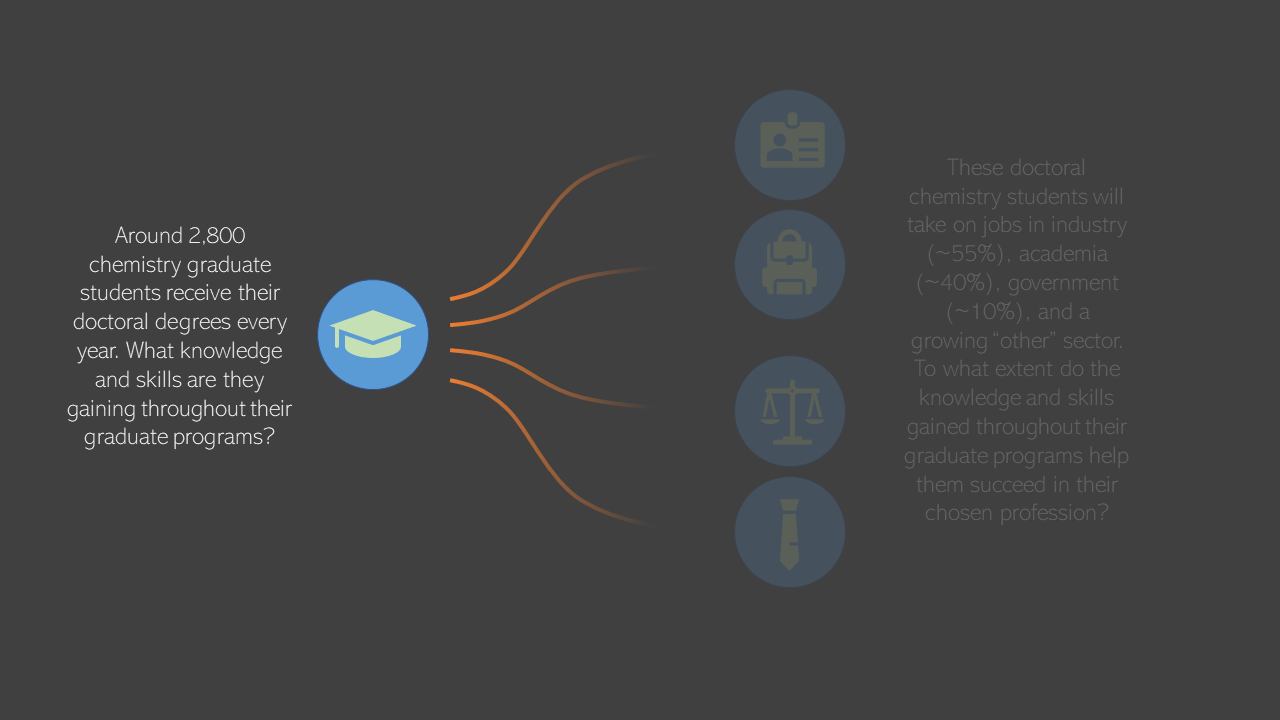
Chemistry Ph.D. programs are currently training over 20,000 students nationwide. These students typically complete their degrees in about five and a half years before seeking careers in a wide range of fields, including industry, academia, and government. The variety of roles they fill, from researchers and teachers to consultants and managers, highlights the need for doctoral programs to equip them with a diverse set of skills and knowledge.
The Harshman Research Group aims to investigate this topic by comparing the skills and knowledge students gain in their Ph.D. programs with the skills and knowledge needed for their future careers. By identifying any gaps, we can evaluate the effectiveness of traditional graduate components like courses, research, and exams. This research will help us better understand the career preparedness of doctoral-level chemists.
We also study how chemistry faculty see the goals of doctoral education, and what they believe about how PhD students should be trained.

Related publications
Faculty beliefs about the goals of doctoral education in chemistry: Results from a national survey
Students’ perceptions of staple elements of the doctoral program: Research, courses, exams, and seminars
Identifying the underlying challenges that face doctoral education in chemistry
Doctoral education in chemistry: Faculty perspectives on programmatic elements’ goals and outcomes
The goal of doctoral education in chemistry: Faculty perspectives
Learning goals and priorities identified by an examination of chemistry graduate handbooks
02
Teaching practices and beliefs in STEM classrooms
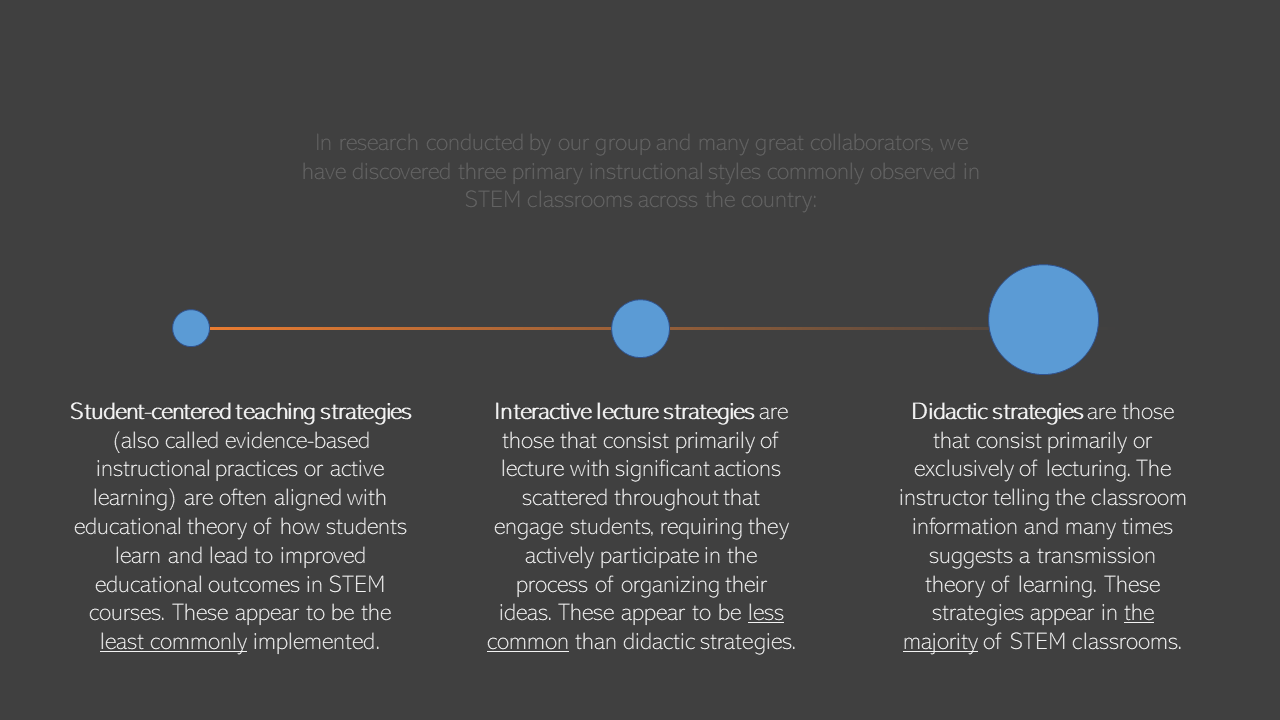
Researchers have long known that active learning can significantly improve student engagement and learning in college-level STEM classes. Despite this, studies from our collaborators show that these teaching strategies are not widely used in STEM classrooms. Our research group is using the Classroom Observation Protocol for Undergraduate STEM (COPUS) to analyze instructor behaviors and identify patterns in teaching methods. We believe that linking these observed classroom behaviors to student learning outcomes will help us better understand the effectiveness of different teaching strategies.
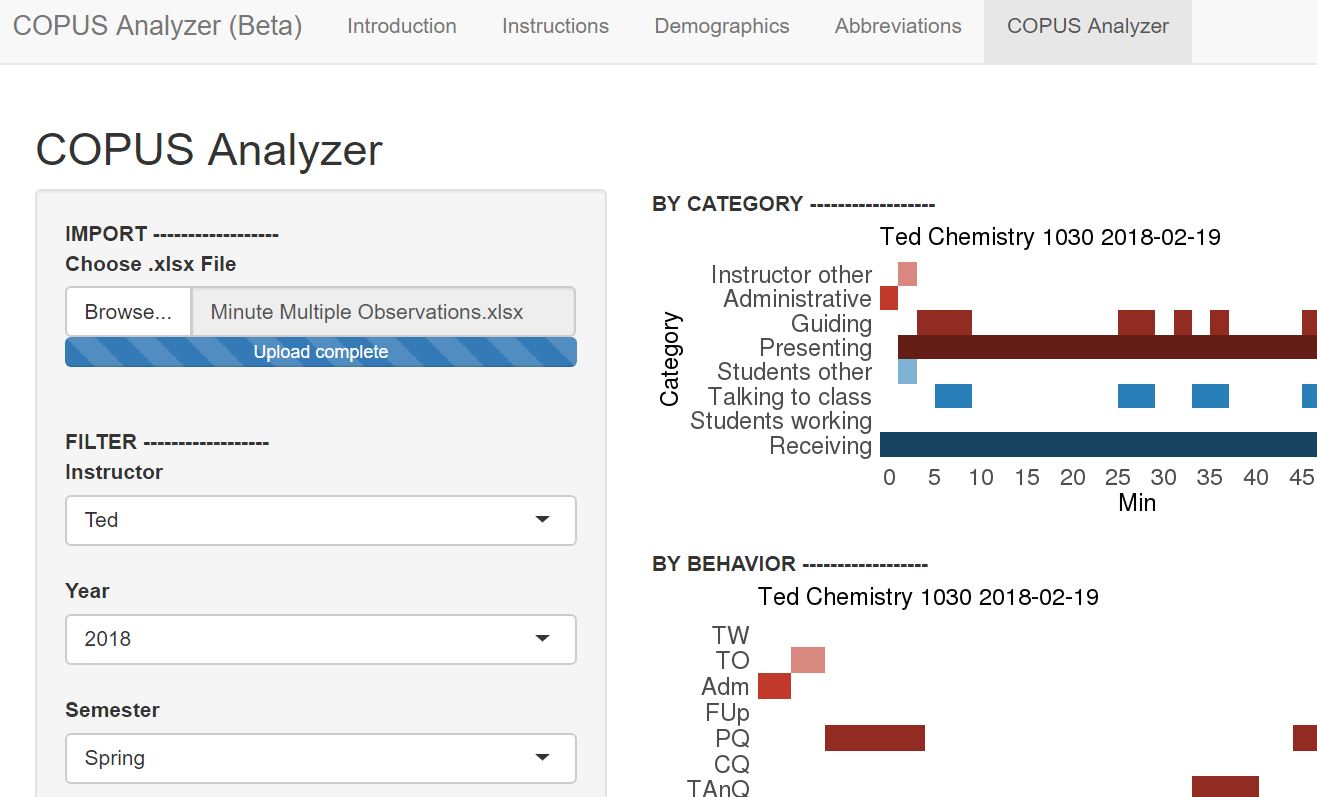
In collaboration with Dr. Marilyne Stains at the University of Virginia, our group developed and maintains the COPUS Analyzer website. This online tool allows researchers and educators to upload their own COPUS data. The analyzer then provides valuable feedback through visualizations and classifications, showing how their classroom data compares to the teaching profiles we’ve observed in other studies. The site is also used to help researchers establish inter-rater reliability by comparing data from different observers.
We also study how instructors’ teaching beliefs relate to what they do in class, and how those beliefs change early in a faculty career.
Related publications
Changes in teaching beliefs of early-career chemistry faculty: A longitudinal investigation
Untangling a complex relationship: Teaching beliefs and instructional practices of assistant chemistry faculty at research-intensive institutions
Anatomy of STEM teaching in North American universities
A review and evaluation of the internal structure and consistency of the Approaches to Teaching Inventory
03
Advancing quantitative practices in chemistry education research
The Harshman Research Group is passionate about improving the use of statistical reasoning in chemistry education research. We are strong advocates for using R, a free and powerful programming language. Our goal is to not only utilize R in our own research but also to help others learn how to use this valuable tool. We are available as a resource for anyone who needs assistance.
In a collaborative project with Dr. Jack Barbera at Portland State University and Dr. Regis Komperda at San Diego State University, our group is developing a centralized database of chemistry education research instruments. This project, called the Chemistry Instrument Review and Assessment Library (CHIRAL), provides a single, easy-to-access resource for the chemistry education community.

Related publications
Validity and reliability of survey data: Key to empowering chemical health and safety research
The Chemistry Instrument Review and Assessment Library (CHIRAL): A new resource for the chemistry education community
Putting the R in CER: How the statistical program R transforms research capabilities
Characterizing high school chemistry teachers’ use of assessment data via latent class analysis
Test-retest reliability of the Adaptive Chemistry Assessment Survey for Teachers: Measurement error and alternatives to correlation

